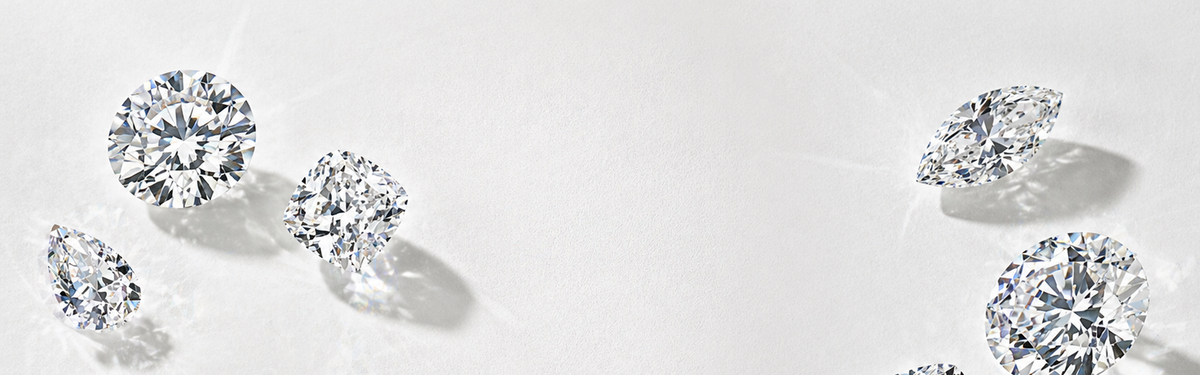

Honest Sourcing
Where our diamonds come from. What our gold was before it became ours. Which gemstones we accept, and which we decline. Stated plainly.
We know where our materials come from. We tell you what we know, and what we are still working to know better.
— The SinceLove Sourcing Manifesto
A global craft, with documented origins
Our materials are sourced across four principal regions of the global fine jewelry supply chain. We select suppliers by standards and verification, not by geography alone. Hover a region to learn what we source there.

North America
One of the leading global regions for lab-grown diamond production, with facilities operating under established environmental and labor regulations. The Gemological Institute of America (GIA), headquartered here, remains one of the foremost authorities in diamond grading worldwide.
- Lab-Grown Diamonds Primary
- Independent Grading GIA
- Supplier Standard Documented
Europe
Newly sourced and refined gold from refiners aligned with LBMA responsible sourcing standards, with documentation retained for every intake.
- Newly Sourced Gold LBMA-aligned
- Refining Standards Established
- Certification Standard Active
South Asia
A major center for lab-grown diamond cutting and polishing. Every stone we take from this region carries an independent IGI certificate.
- Lab-Grown Diamonds Primary
- Independent Grading IGI
- Supplier Standard Documented
East Asia
Home to our own atelier in Shuibei, Shenzhen — where setting, polishing and final finishing are carried out by craftspeople we work with directly.
- Our Atelier Shuibei, Shenzhen
- Lab-Grown Diamonds Secondary
- Craftspeople 50+
The industry minimum, and where we begin
Industry standards establish the floor, not the ceiling. Below is a concrete comparison of what the industry's minimum practice requires, and what a SinceLove piece actually represents.
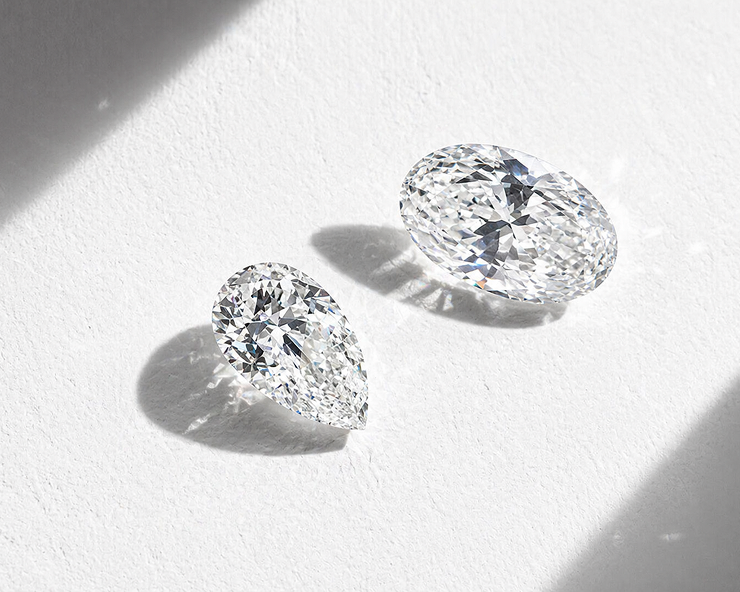
Lab-Grown Diamonds
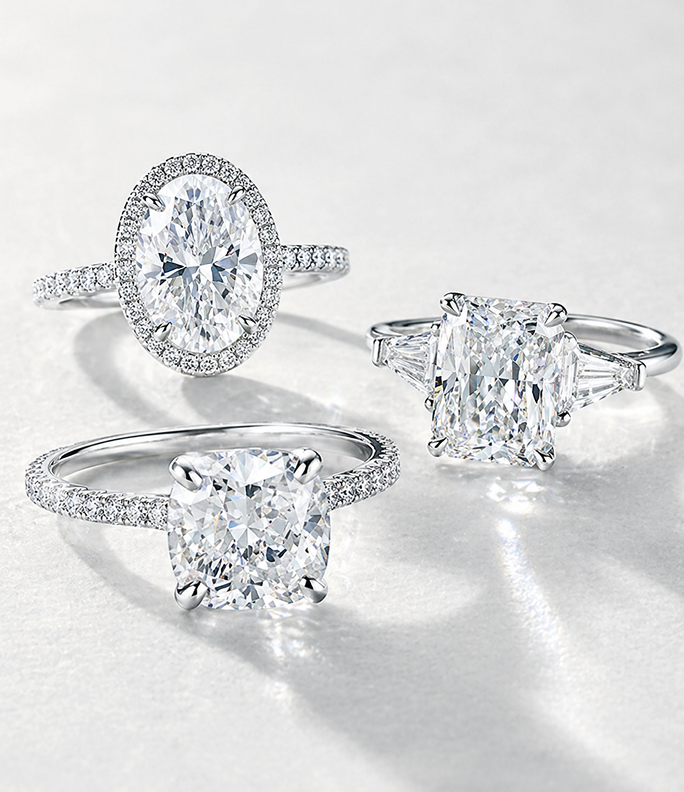
Our principal diamond category is the lab-grown diamond — a stone chemically, physically, and optically identical to a mined diamond, produced in a controlled environment where the inputs and conditions can be documented rather than inferred.
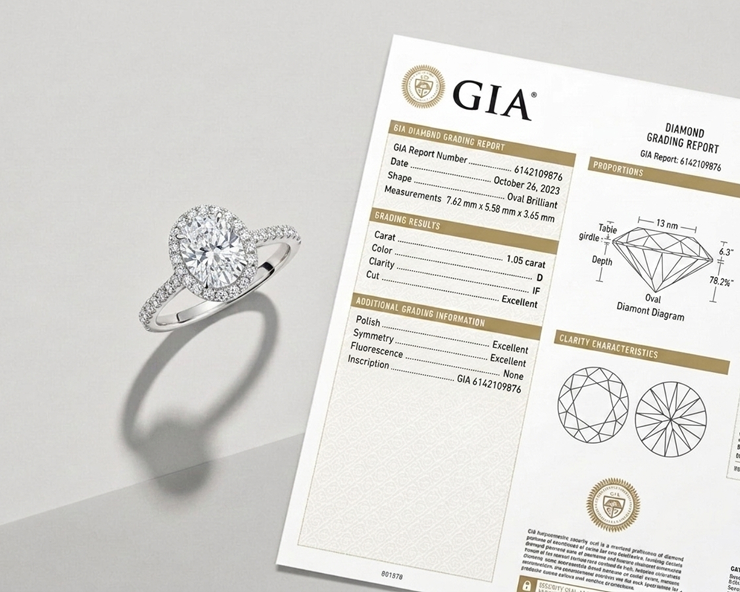
Every center-stone-grade lab-grown diamond we sell is accompanied by an independent grading report from the International Gemological Institute (IGI) — one of the most established laboratories specializing in lab-grown diamond certification.
For smaller accent stones set in pavé or channel work, the industry convention is batch-level quality grading rather than per-stone certification. We follow this convention transparently rather than overstate what is standard across fine jewelry.
We describe these stones as "laboratory-grown diamonds" — never "real," never "eco," never "cultured" — in compliance with the FTC Jewelry Guides (16 CFR §23.12).
Natural Diamonds
For clients who prefer a mined diamond, we offer natural diamonds selected through a documented supply chain — one in which we have evaluated the supplier, reviewed their sourcing claims, and required independent certification at the stone level.
The Kimberley Process Certification Scheme is the international framework established to prevent the trade in conflict rough diamonds. It operates principally at the level of international rough-diamond trade, not at the point of retail sale.
In practice, responsible sourcing of natural diamonds at retail is established through the combination of a supplier's compliant upstream chain, documented supplier declarations, and independent laboratory certification from institutions such as the GIA.
We describe this accurately rather than making broader claims that the framework itself does not support.
“True responsibility is built into every choice — from the origins of our diamonds and metals to the partners we trust along the way.”
— The Responsible Sourcing of SinceLove
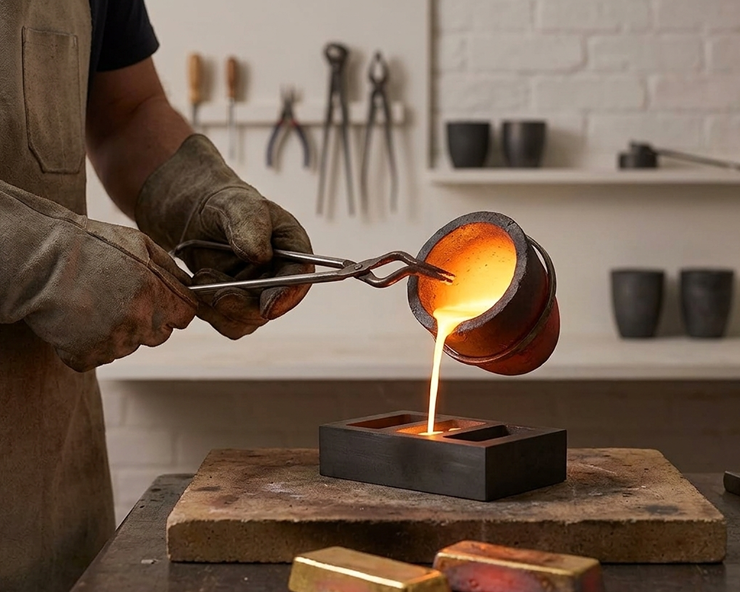
Metals & Refining
Our pieces are made in solid 14-karat gold, 18-karat gold, platinum, and — for select pieces — sterling silver. Every metal is specified to its alloy and disclosed at the point of sale.
We use a combination of refined recycled gold — reclaimed material, assayed to meet purity standards — and newly sourced gold selected from suppliers aligned with the LBMA Responsible Gold Guidance.
The ratio of recycled to newly sourced material varies by piece. We do not claim a single fixed percentage that applies to every item; what we can stand behind is that the metal in every SinceLove piece has been selected against a consistent purity and sourcing standard, and that we are working toward per-piece recycled-content disclosure as our reporting infrastructure matures.

Colored Gemstones
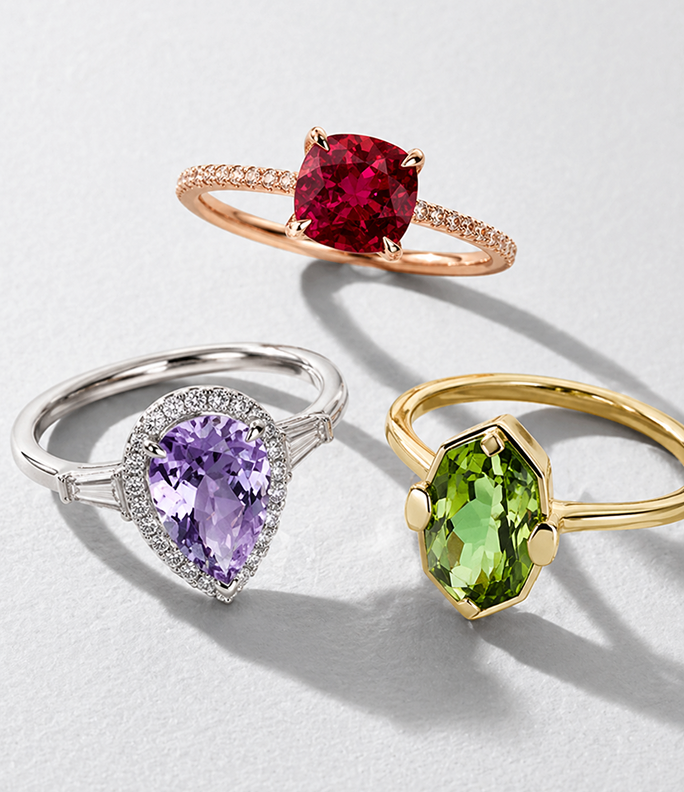
Sapphires, rubies, emeralds, morganite, tanzanite, and other colored gemstones are offered through suppliers who provide origin documentation and treatment disclosure for each parcel. Where treatments have been applied — heating, oiling, or other industry-standard practices — they are disclosed to the client at the point of sale.
We decline to work with any stone whose origin we cannot document through the supplier chain. We do not purchase stones from regions under active sanctions or from supply chains where upstream conditions cannot be reasonably verified. If we cannot answer where a stone came from, we do not sell it.
This is a simple rule. It occasionally costs us a piece a client would have liked to commission. We consider this an acceptable cost.
The institutions that verify our work
We work with five of the most established frameworks in fine jewelry certification and oversight. Hover each partner to see our current status.
Our four sourcing principles
We do not publish the names of our suppliers. What we publish are the principles by which we evaluate them.
Independent gemological certification on every center-stone-grade diamond. Origin disclosure on every colored gemstone parcel. A supplier's own claim is the starting point of evaluation, never the conclusion.
We work with suppliers across multiple regions. Over-concentration in any single geography creates supply-chain fragility and reduces our ability to make principled choices when regional conditions change.
If a stone, metal, or parcel cannot be documented to the standard we have set, we do not purchase it. We decline rather than guess. This is an operating cost of the standards we have chosen.
Supplier relationships are not static. We re-evaluate the suppliers we work with regularly, and end relationships where the direction of travel is not the one we are moving in.